
by Sue Trigger
This week was full of busy, stressful days from morning till evening. It was a meeting week for me,every meeting at the church was balanced by a meeting for the Presbytery. For every one during the day, there was another in the evening. Some meetings were full of excitement and energy as new ideas were being dreamed. Some meetings were full of anxiety as struggles were being tackled. One moment was hopeful and the next was stressful. Sleeplessness came every night. Then Thursday came.
Thursday brought us the shock of the death of a beloved woman who was part of our smaller congregation. Doris was a beautiful woman, a gentle soul who was always ready to listen and comfort. She opened herself to people and when you spoke with her you felt that she was genuinely sharing who she was, no pretense, no mask. Doris was a woman of faith, a woman of integrity. Her death was unexpected and far too soon and our hearts are heavy with sorrow at her passing.
Friday we visited with one of our beloved elderly members of our larger church. She has been battling the decline of her physical strength that has plagued her with falls that have taken their toll. She too is a woman of faith who has lived with the sadness of losing family and friends even as she lives on. Today, as she mourns the loss of another family member, she shared that she is ready to die. Audrey knew Doris a bit. They had volunteered together in the kitchen during a VBS a couple years ago. She remembered Doris was so kind and lovely. She questioned why loved ones far younger than she have died while she lives on. It was an odd moment of connection between Doris and Audrey and their pastors. I was reminded of how connected we are in God.
As I reflect on this roller coaster week I am reminded of how easily we become consumed with the details of life. We have crafted the Church into an organization full of systems and structures that do little to further the kingdom of God, but keep our work neatly moving along. It was beautiful to see people dreaming of new ways a few congregations can create something greater in an effort to take God's love and care to those who are poor, hungry, and homeless. It was powerful to see just how resilient people are even when so much is challenging us. But in the blink of an eye it can all be gone. One at a time the reality of our finitude forces itself upon us.
The death of Doris caught me by surprise and helped me to pause and look at all that I was immersed in this week. It helped me to remember that there is very little that is nearly as important as we make it out to be. The shortfall in a church's budget may seem grave to those who love their church. The need to create new committees and structures to serve our Presbytery may seem terribly important for the future. So what? What difference does it make in the end? It doesn't make a difference if what we do is not done in relationship with God.
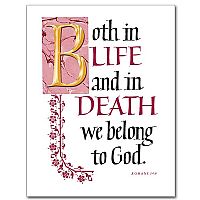
One Sunday not long ago I was preaching a sermon about sharing our stories of faith with others. I suggested that when we share our stories of how we've experienced God, others may can feel embraced in God's love and encouraged to seek God. I invited members to share stories of when they had experienced God in a powerful way. Several people shared their stories, each one meaningful and informative. Then Doris spoke. She shared a deeply personal story about her life from a time when she was young and social norms were not as they are today. She had become pregnant at a young age and was forced to give up her child for adoption. Later she married the father of her child and they had other children, but the loss of her first born and the desire to know her burned deeply in her heart. It was through her connection to the church of her childhood that she eventually learned where her daughter was living and was blessed to connect with her and develop a relationship. The sadness in her voice and on her face as she spoke of her experience and the years without the child she loved was equally matched by the joy that radiated from her as she spoke of how God had been at work bringing her back to her child. Her story touched us all. There were a few tears shed by women in the pews; mothers who could imagine the sorrow and joy. Her story was the story of a young woman who grew into a spiritual powerhouse because God had carried her through the challenges. As this week of meetings and paperwork, dreams and discouragement comes to a close, I give thanks for Doris. I only knew her for two short years, but her impact will stay with me. Her baptism is complete. Her journey in this life is done. Yet even In her living and in her dying she taught one more beautiful lesson that is power for living and comfort for the soul; Doris had embodied what Christians all proclaim, in life and in death we belong to God.
This week was full of busy, stressful days from morning till evening. It was a meeting week for me,every meeting at the church was balanced by a meeting for the Presbytery. For every one during the day, there was another in the evening. Some meetings were full of excitement and energy as new ideas were being dreamed. Some meetings were full of anxiety as struggles were being tackled. One moment was hopeful and the next was stressful. Sleeplessness came every night. Then Thursday came.
Thursday brought us the shock of the death of a beloved woman who was part of our smaller congregation. Doris was a beautiful woman, a gentle soul who was always ready to listen and comfort. She opened herself to people and when you spoke with her you felt that she was genuinely sharing who she was, no pretense, no mask. Doris was a woman of faith, a woman of integrity. Her death was unexpected and far too soon and our hearts are heavy with sorrow at her passing.
Friday we visited with one of our beloved elderly members of our larger church. She has been battling the decline of her physical strength that has plagued her with falls that have taken their toll. She too is a woman of faith who has lived with the sadness of losing family and friends even as she lives on. Today, as she mourns the loss of another family member, she shared that she is ready to die. Audrey knew Doris a bit. They had volunteered together in the kitchen during a VBS a couple years ago. She remembered Doris was so kind and lovely. She questioned why loved ones far younger than she have died while she lives on. It was an odd moment of connection between Doris and Audrey and their pastors. I was reminded of how connected we are in God.
As I reflect on this roller coaster week I am reminded of how easily we become consumed with the details of life. We have crafted the Church into an organization full of systems and structures that do little to further the kingdom of God, but keep our work neatly moving along. It was beautiful to see people dreaming of new ways a few congregations can create something greater in an effort to take God's love and care to those who are poor, hungry, and homeless. It was powerful to see just how resilient people are even when so much is challenging us. But in the blink of an eye it can all be gone. One at a time the reality of our finitude forces itself upon us.
The death of Doris caught me by surprise and helped me to pause and look at all that I was immersed in this week. It helped me to remember that there is very little that is nearly as important as we make it out to be. The shortfall in a church's budget may seem grave to those who love their church. The need to create new committees and structures to serve our Presbytery may seem terribly important for the future. So what? What difference does it make in the end? It doesn't make a difference if what we do is not done in relationship with God.
One Sunday not long ago I was preaching a sermon about sharing our stories of faith with others. I suggested that when we share our stories of how we've experienced God, others may can feel embraced in God's love and encouraged to seek God. I invited members to share stories of when they had experienced God in a powerful way. Several people shared their stories, each one meaningful and informative. Then Doris spoke. She shared a deeply personal story about her life from a time when she was young and social norms were not as they are today. She had become pregnant at a young age and was forced to give up her child for adoption. Later she married the father of her child and they had other children, but the loss of her first born and the desire to know her burned deeply in her heart. It was through her connection to the church of her childhood that she eventually learned where her daughter was living and was blessed to connect with her and develop a relationship. The sadness in her voice and on her face as she spoke of her experience and the years without the child she loved was equally matched by the joy that radiated from her as she spoke of how God had been at work bringing her back to her child. Her story touched us all. There were a few tears shed by women in the pews; mothers who could imagine the sorrow and joy. Her story was the story of a young woman who grew into a spiritual powerhouse because God had carried her through the challenges. As this week of meetings and paperwork, dreams and discouragement comes to a close, I give thanks for Doris. I only knew her for two short years, but her impact will stay with me. Her baptism is complete. Her journey in this life is done. Yet even In her living and in her dying she taught one more beautiful lesson that is power for living and comfort for the soul; Doris had embodied what Christians all proclaim, in life and in death we belong to God.

 RSS Feed